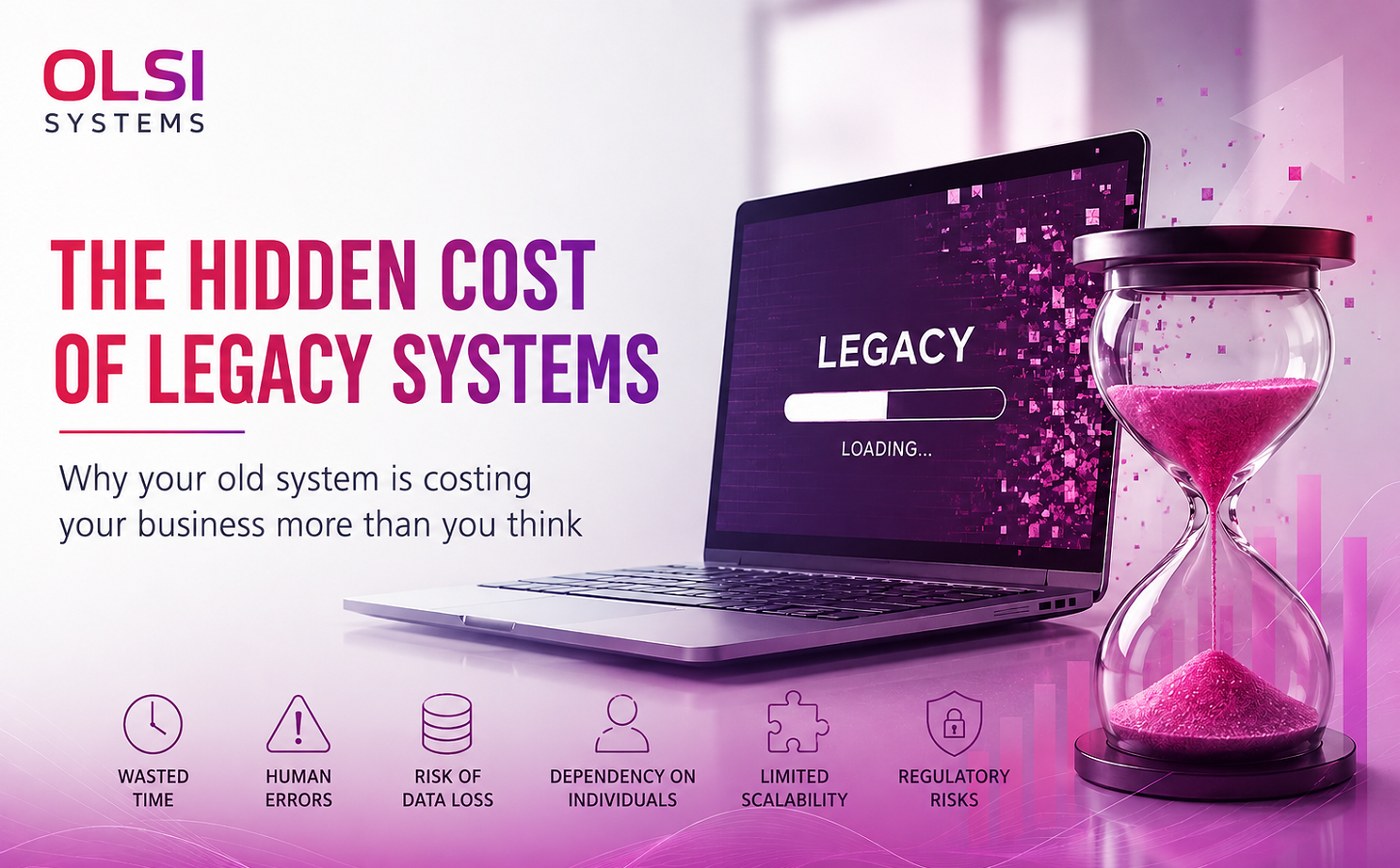
Many businesses work with the same information system for years. Sometimes it's an aging Access database, sometimes it's software that was built specifically for the business a decade or two ago, and sometimes it's even a collection of Excel files that gradually became the company's central management system.
In most cases the system still "works." The employees know it, the data lives in it, and the processes keep running every day.
That is exactly why so many business owners keep postponing the decision to upgrade.
In practice, though, the cost of a legacy system is almost never measured in its licensing or maintenance fees. It shows up as wasted working hours, human errors, lost business opportunities, information security risks, and the difficulty the business has in growing.
In other words, the fact that the system still runs does not mean it still pays off.
The Cost That Never Appears on a Financial Report
When a manager reviews the company's expenses, they usually see the direct costs: salaries, procurement, equipment, IT services and software licenses.
But there is another cost that is far harder to measure, the cost of inefficient work.
An outdated system forces employees to perform manual tasks, to type the same data over and over, to run duplicate checks, to export information into Excel files, to hunt for data across several systems that aren't synchronized, and to wait for operations that should finish within seconds.
When each task takes just one extra minute, the damage is barely noticeable.
When dozens of employees perform hundreds of such tasks every day, it adds up to hundreds of working hours a year that create no real value for the business.
For that reason, many organizations now treat "technical debt" as a business cost in every sense. Instead of investing resources in developing new products, improving service or building automation, a significant share of IT resources goes into maintaining legacy systems, fixing failures and working around technological limitations.
Technical Debt Is Like a Loan With Interest
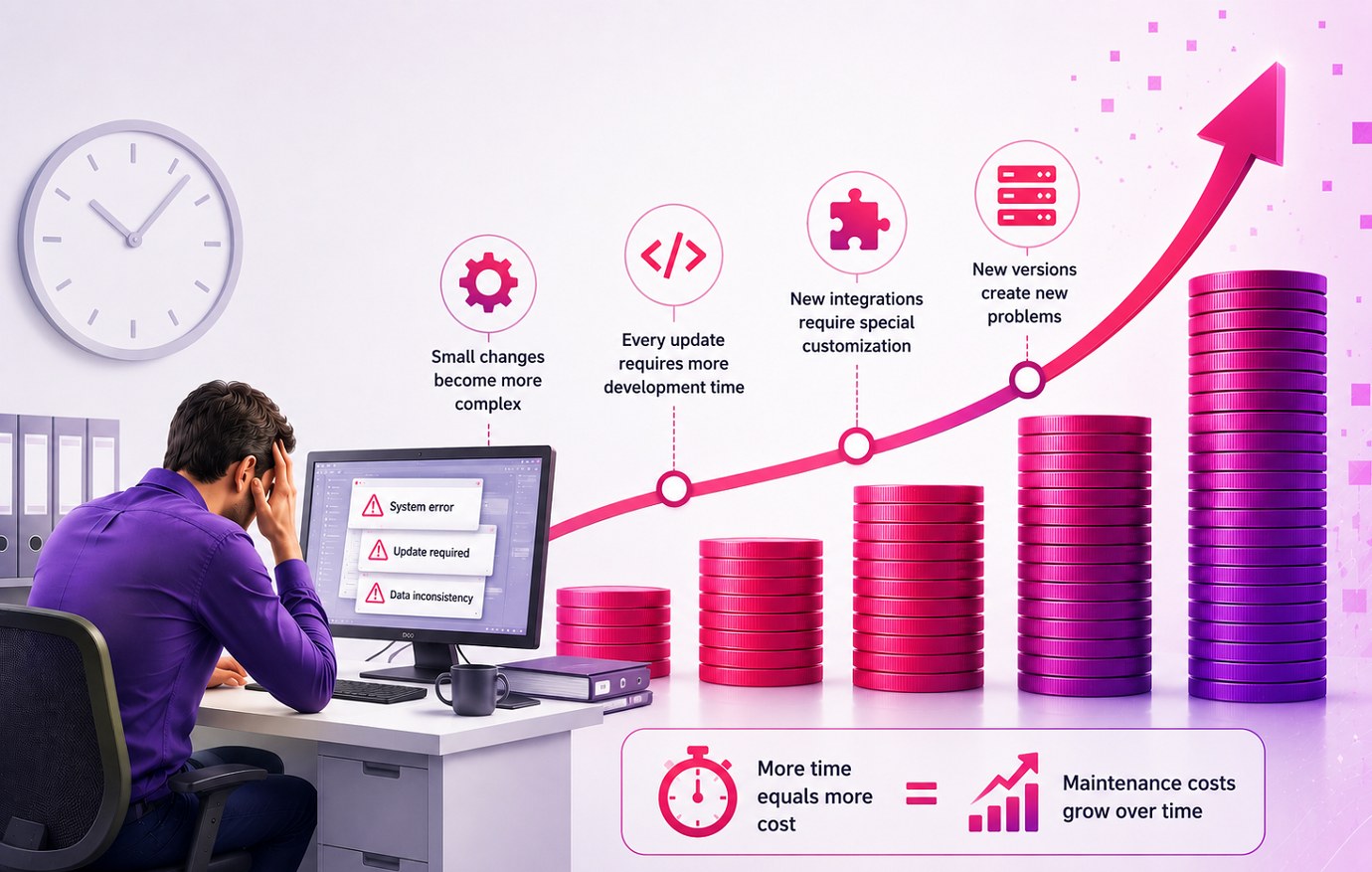
Technical debt isn't a problem that stays the same size, it keeps growing over time.
- Every small change to the system becomes more complicated.
- Every update requires more development hours.
- Every new integration requires special customization.
- And every new version of an operating system, browser or server can create problems that didn't exist before.
At a certain point the organization is no longer developing the system, it is mainly investing time and money in trying to keep it alive.
That is precisely the point where the accumulated cost of maintenance starts approaching, and sometimes even exceeding, the cost of modernizing the system.
Your Data Is the Most Valuable Asset the Business Has
Business owners invest in inventory, in equipment and in marketing, yet very often their most valuable asset sits in the database.
Customers, orders, pricing, service history, documents, and business knowledge accumulated over many years.
When a system is based on an old database or on local files, the risk to that information grows.
For example, file-based systems such as Microsoft Access are more prone to file corruption in the event of hardware failures, network disconnections, several users working at the same time, or an improper computer shutdown, compared with systems built on dedicated database servers such as SQL Server or PostgreSQL.
Even when backups exist, a full restore isn't always simple. Sometimes the file can be recovered, but there's no guarantee that all the data was saved correctly or that every recent action performed in the system will be restored in full.
That is why information security today isn't only about protection from cyber attacks, it also covers data integrity, availability and the ability to recover quickly when something goes wrong.
Learn more about upgrading an Access system to a new web platform
The Risk No One Plans For
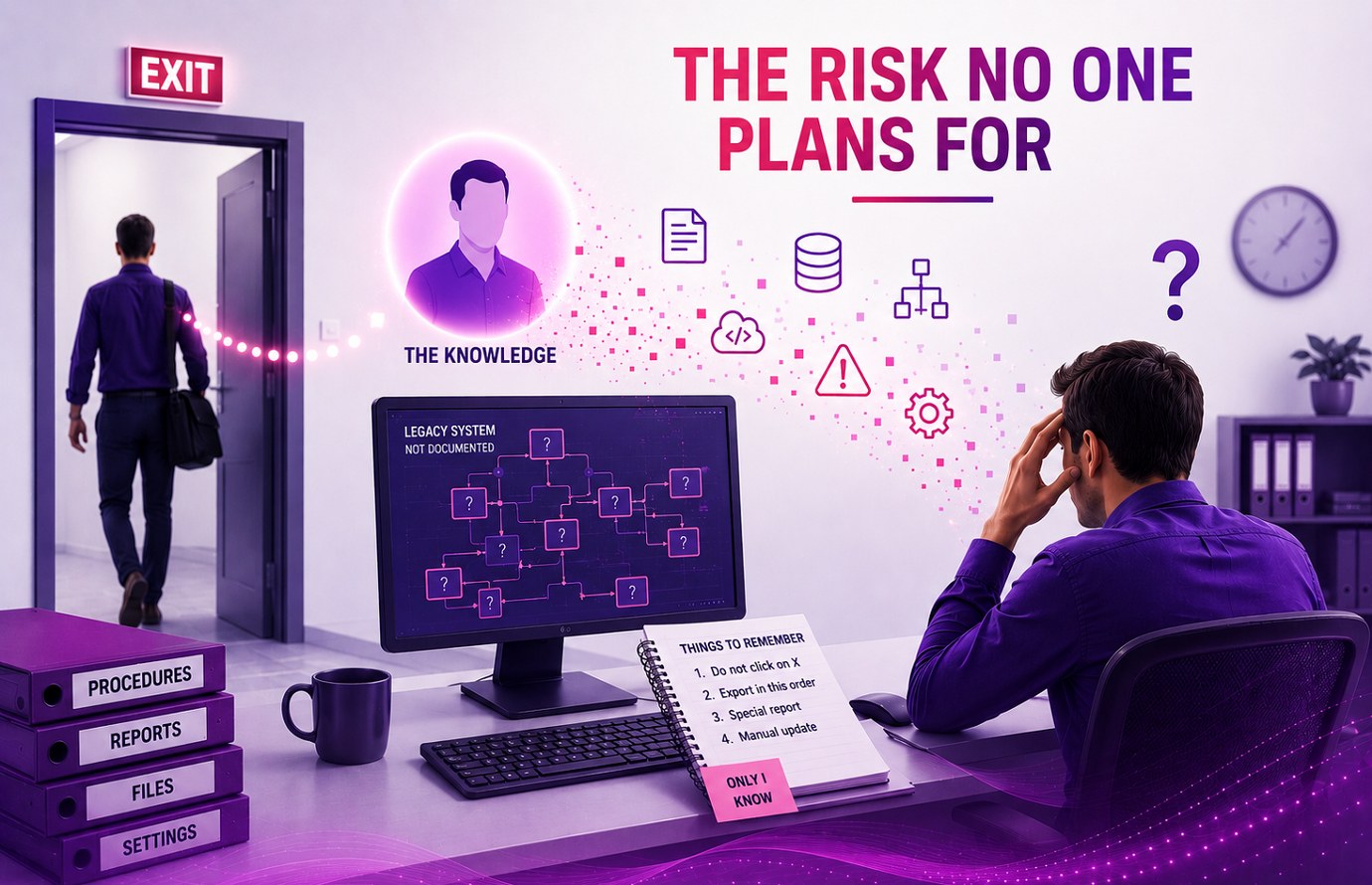
One of the greatest vulnerabilities of legacy systems isn't the technology, it's the knowledge itself!
- In many organizations there is one person who knows the entire system.
- Sometimes it's the developer who built it fifteen or twenty years ago.
- Sometimes it's a veteran employee who knows which buttons not to press, in what order to run the reports, and how to solve problems that aren't documented anywhere.
As long as that person is still with the organization, everything works.
When they leave, retire or simply become unavailable, the business discovers that a large part of the knowledge was never documented at all.
At that point a race against the clock begins, just to understand how the system actually works.
The Real Cost Is Exactly What You Don't See
When we put all the pieces together, the wasted working hours, the recurring errors, the complex maintenance, the dependency on personal knowledge, the data risks, the technological limitations and more, a very clear picture emerges.
A legacy system doesn't necessarily save money.
In most cases it simply creates indirect expenses that never appear on a budget line, yet directly affect profitability, service levels and the ability of the business to compete.
So the right question to ask isn't "how much will it cost to upgrade the system?", but rather "how much is it costing us to keep working the way we work today?"

How We Work at OLSI Systems
Since 1995, OLSI Systems has been guiding businesses and organizations through the modernization and migration of their information systems.
Rather than replacing everything at once, we start with an in-depth analysis of the existing system, identify the sources of technical debt, examine which components are worth preserving and which are worth rebuilding, and then design a gradual migration plan to a modern web system that is secure and flexible.
This makes it possible to preserve the business knowledge built up over the years, reduce risk, improve operational efficiency, and give the business a technological foundation that will serve it in the years ahead as well.
If you're still working with an Access database, a legacy system or aging software that was built specifically for your business, it's worth pausing to examine not only whether it still works, but also how much it is really costing you.
For a solution tailored to your business:
Get in touch by leaving your details for a callback, give us a call, or reach us on WhatsApp
We would be glad to help!