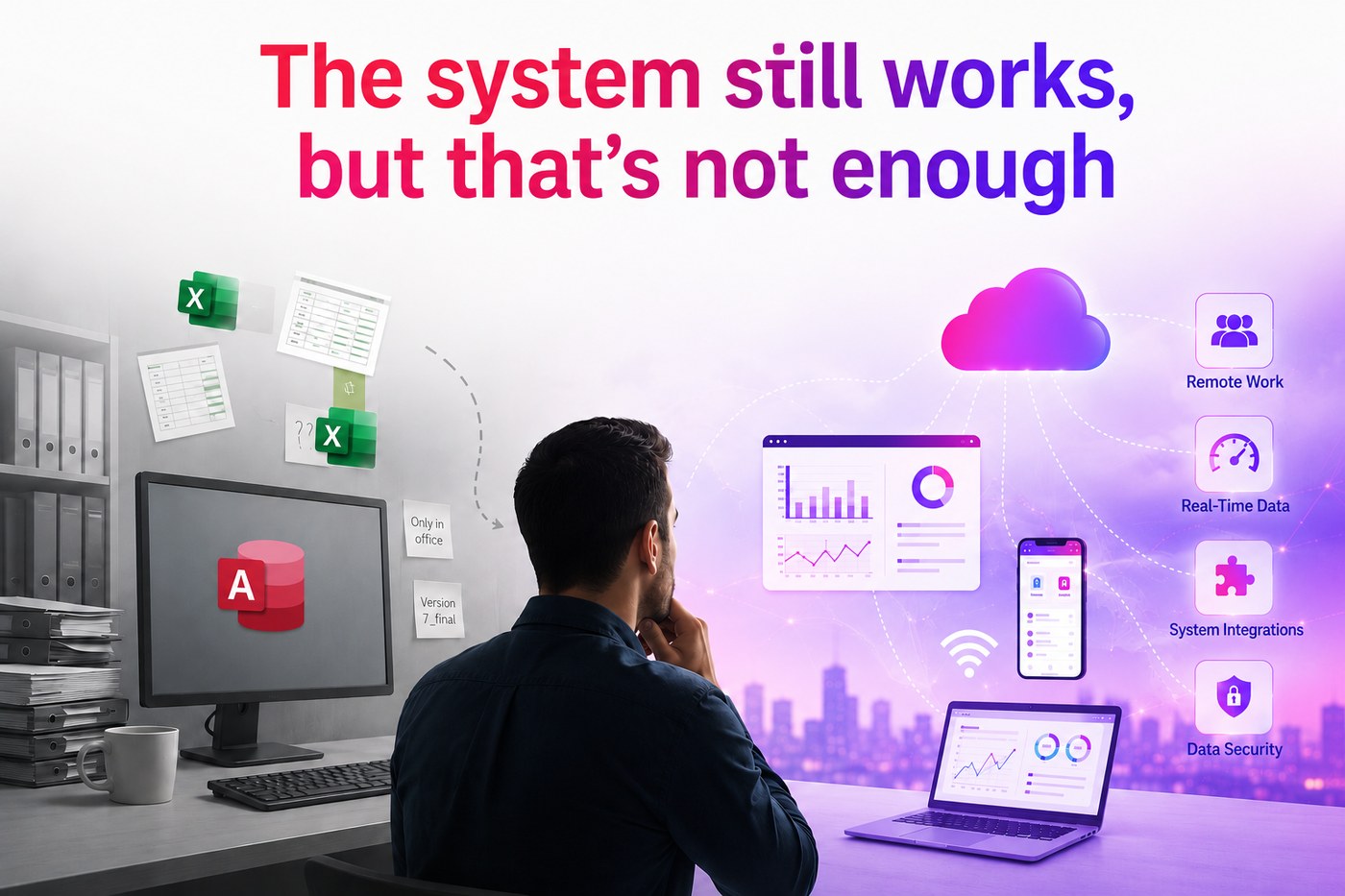
Plenty of businesses still run on an Access database, an aging piece of software that was built specifically for them, or a collection of Excel files that has quietly become the company's central management system over the years.
In most cases the system still "works," so it feels like there's no reason to invest in changing it.
But today's business reality is completely different from the one the system was built for. Employees connect remotely, customers expect fast service, systems need to talk to each other in real time, and business data has become the single most valuable asset in the organization.
The question is no longer whether the system runs, but whether it allows the business to grow.
If you recognize one or more of the following signs, it may be time to consider upgrading to a modern web system.
1. Every Small Change Turns Into a Project
- Need to add a new field?
- Build another report?
- Update a workflow?
In a modern system, these are usually fairly simple tasks.
In an aging system, by contrast, every small change raises the fear of breaking other modules, code that was written years ago, or existing reports.
Once a system becomes difficult to maintain, it stops serving the business and starts slowing it down.
2. Your People Can No Longer Work From Anywhere
Businesses today work from the office, from home, from the field, and from a mobile phone.
When the management system is only available from one particular computer at the office, or requires complicated connections, unnecessary delays start to pile up.
Salespeople can't update data in real time, managers don't see current information, and the work ends up running on Excel files sent around by email or WhatsApp.
Custom web system development provides secure access from anywhere, from any computer or mobile device, and strictly according to the permissions you define.
3. You're Entering the Same Data Twice
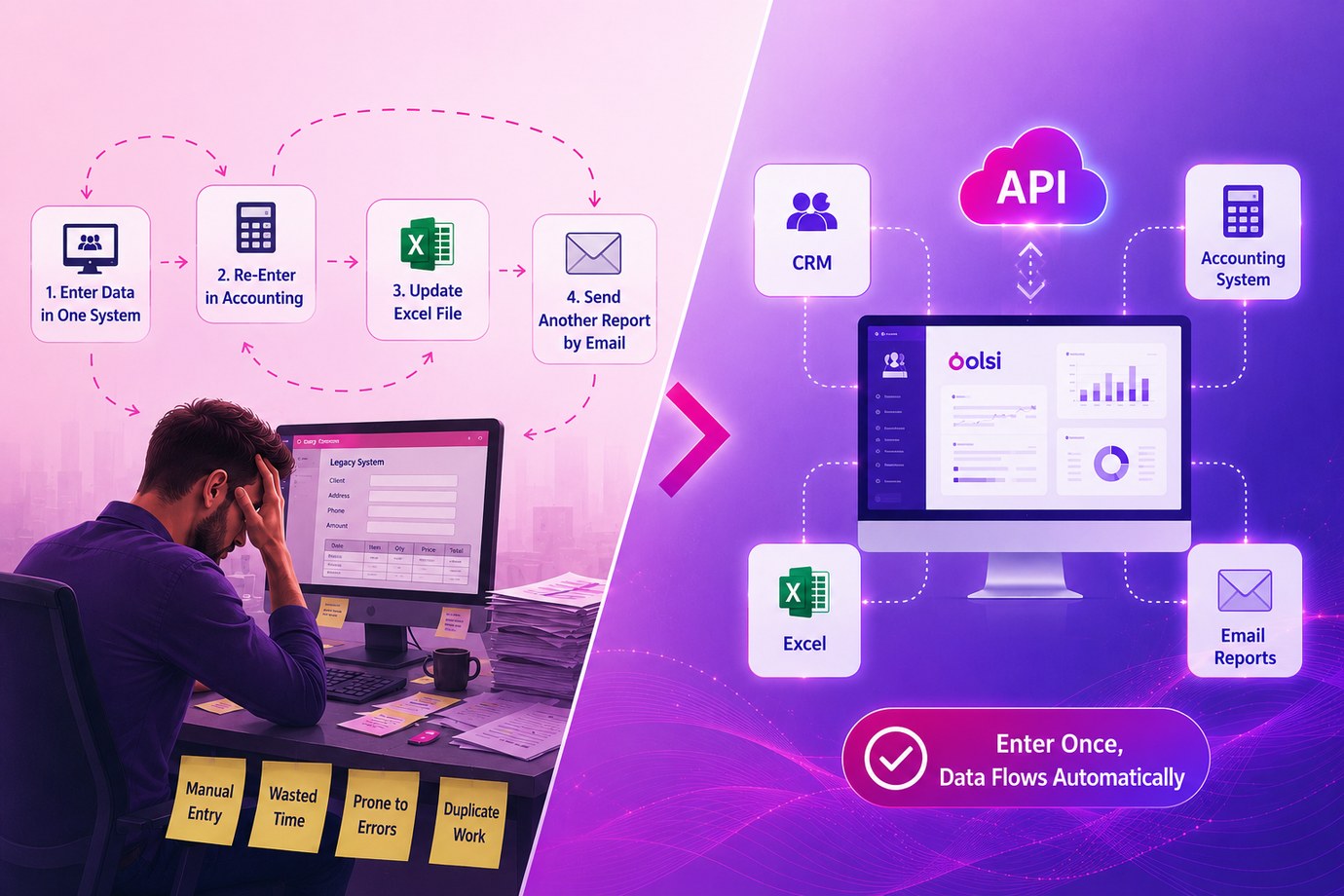
One of the clearest signs of an outdated system is duplicate work.
- You entered an order in one system.
- Then you entered it again into the accounting software.
- Then you updated an Excel file.
- And then you sent yet another report by email.
Beyond the wasted time, every extra round of typing increases the chance of errors.
A modern system knows how to connect to other systems through APIs and transfer information automatically, so the data is entered only once.
4. The Business Has Grown, but the System Stayed Behind
A system built ten or fifteen years ago was usually designed for a smaller business.
Over time, employees, customers, products, and new processes were added, but the system remained almost exactly as it was on the day it was built.
The result is a system that struggles to cope with large volumes of data, with a high number of users, or with more complex business processes.
Instead of supporting the growth of the business, it becomes a constraint.
5. Nobody Really Knows the System Anymore
This is perhaps the most dangerous sign of all.
- Only one person knows how the system works.
- Only they know where the code is kept.
- Only they are able to make changes.
If that person isn't available, leaves the company, or simply no longer works in the field, the entire business can be left with no way to maintain one of its most important systems.
A modern system should be documented, built in an organized way, and based on current technologies that allow development to continue in the future as well.
Learn more about upgrading an aging Access system
You Don't Have to Start Everything From Scratch
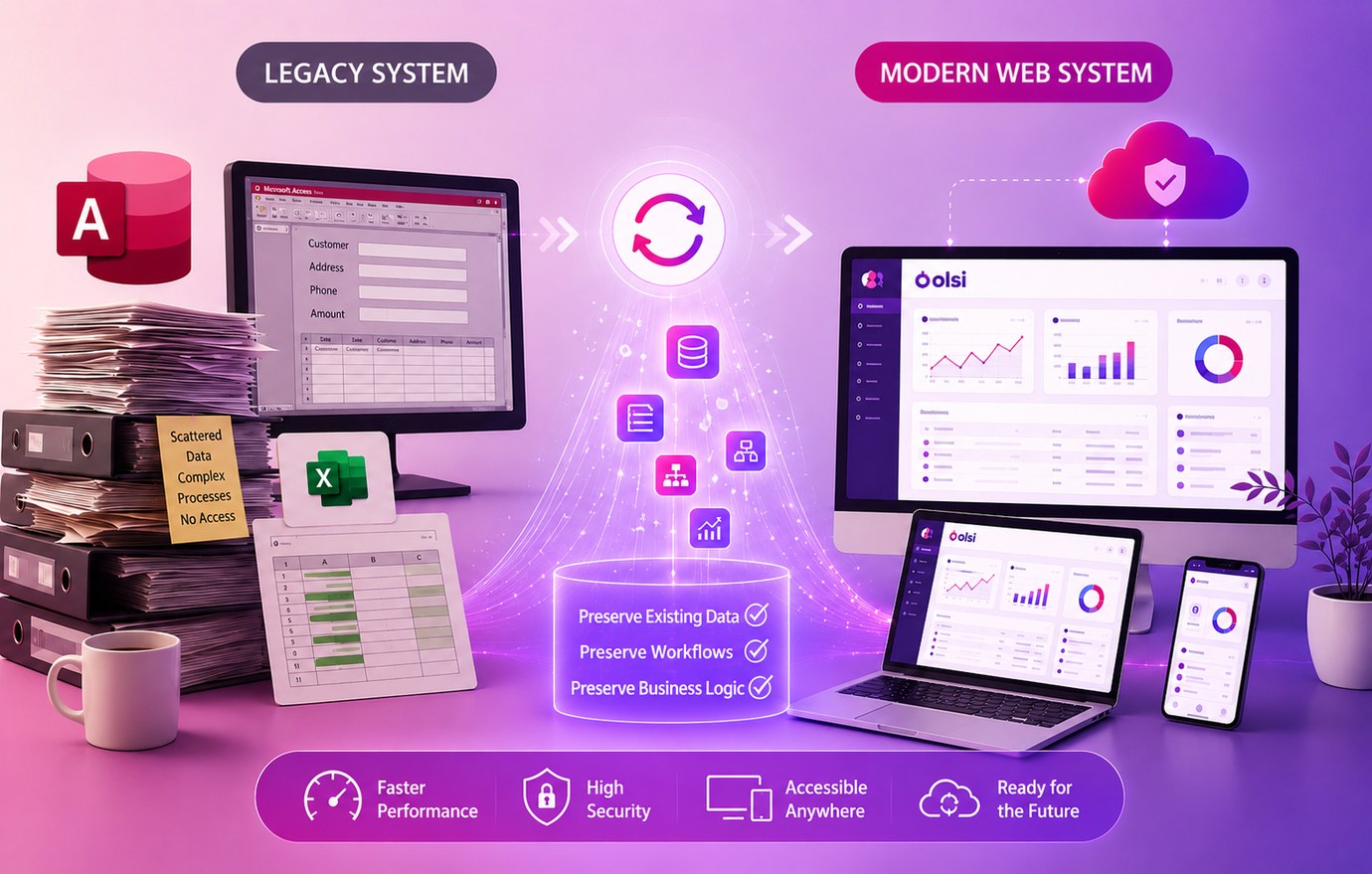
One of the most common mistakes is thinking that upgrading a system means throwing away everything that was built over the years.
In practice, in most cases the real value lies precisely in what already exists: the data you've accumulated, the work processes, and the business logic you've developed over the years.
A proper migration of a legacy system to a web platform lets you preserve that knowledge, move it onto modern technology, and build a system that is fast, secure and accessible from anywhere, without giving up what the business has already invested.
How We Work at OLSI Systems
Since 1995, OLSI Systems has been developing custom information systems and guiding businesses through the modernization of their existing systems.
Whether it's an aging Access database, a legacy system, an Excel-based solution, or software that was built specifically for the organization years ago, we start by examining the business needs, mapping the existing system, and only then planning the migration process.
The goal is not merely to replace technology, but to create a system that will serve the business in the years ahead, one that enables growth, automation and integration with other systems.
If you feel that your current system is already limiting the business, this is exactly the right time to check whether it can be migrated to a modern web system, without losing the business knowledge you've built up over the years.
For a solution tailored to your business:
Get in touch by leaving your details for a callback, give us a call, or reach us on WhatsApp
We would be glad to help!