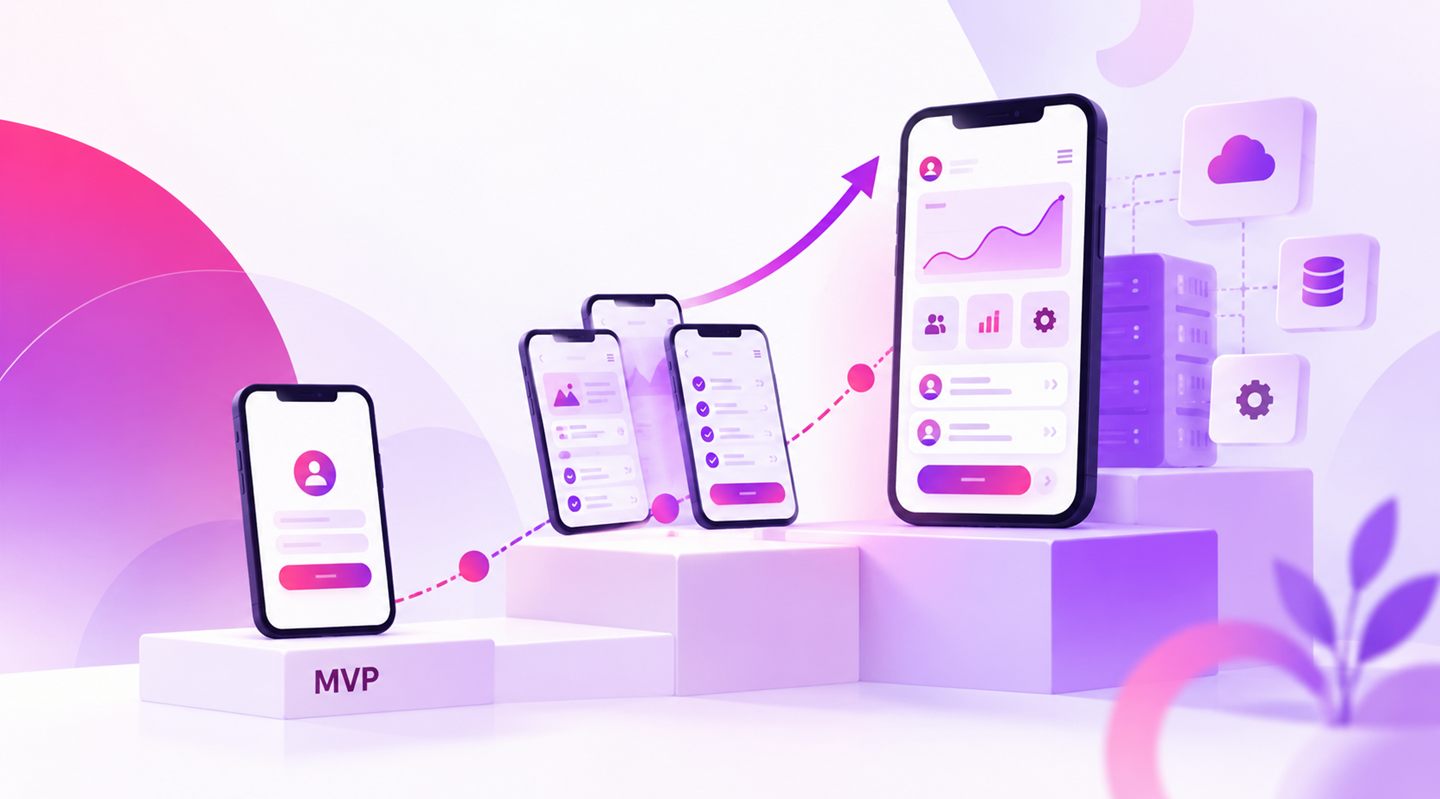
You have an idea for an app. You know what problem it should solve, who it is for, and maybe you have already put together a long list of features. But just before development begins, an important question comes up: what really needs to go into the first version?
For a startup, starting with the full product is not always the right move. You can begin with an MVP, an initial version that contains the product's core capabilities and lets you start using it, test the idea and gather feedback.
The challenge begins when the idea works. Users join, new requirements come up, and suddenly the simple app also needs a management system, permissions, payment processing or a connection to other systems.
So how do you move from an MVP to a complex app, and what should you take into account right from the start?
Start with what the user actually needs
Before writing a single line of code, you need to understand the core action the app is meant to let the user perform.
Let's say you are building an app for booking a service. In the first version, the user may only need to sign up, choose a service, book a time slot and receive a confirmation. There is no real need to add, right now, every report, automation or management option that might be required in the future.
At OLSI, the app development process starts with understanding the need, the users and the way the app will work. The goal is to define what needs to be built before the development itself begins.
Learn more about app development.
What happens when the MVP starts to grow?
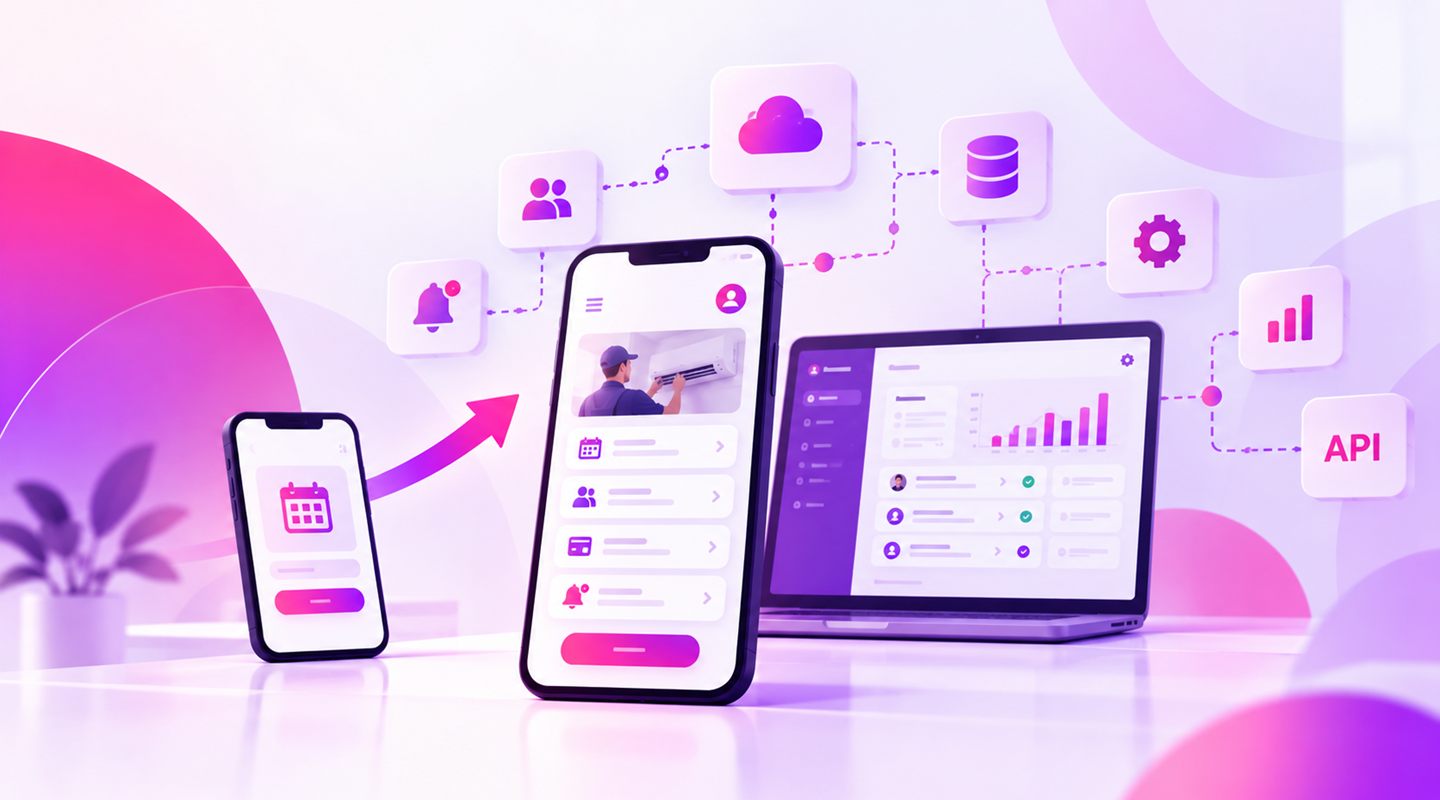
Let's go back to that service booking app. Over time the business grows, and now you need to let different employees receive tasks, give the manager different permissions, send notifications to customers, take payments inside the app and pass information to the company's management system.
At this point we are entering the world of complex app development, where the app the customer sees on their phone is only one part of a much larger system.
Behind it there can be a database, a management system, business logic, permissions and connections to external systems and services.
That is why, when looking for a software house to build your app, it is worth thinking not only about the first version, but also about that team's ability to keep developing the product as the requirements change.
What's worth knowing already at the MVP stage?
You can't know in advance which features users will ask for a year from now, and there is no need to try to guess everything.
But if you already know the product is likely to include several types of users, a management system, a connection to a CRM or ERP, payment processing or working with larger volumes of data, it's worth having these on the table already at the specification stage.
This doesn't mean they need to be built immediately. The point is that the team building the first version understands not only what the product needs to do today, but also where the startup plans to take it.
For technology companies, this challenge is especially significant. Read about software development for high-tech companies.
Why does it matter who develops your app?
A startup, by its very nature, changes on the move. User feedback can reshape a feature, a large client can raise a new requirement, and the business model itself can evolve. Naturally, the relationship with the software house doesn't necessarily end when the first version launches.
OLSI Systems is a boutique software house operating since 1995, specialising in custom software and app development tailored to each client's needs. The work is done in direct contact with the professionals who build the system, with no layer of salespeople in between, and the support continues after go-live, with the option to maintain, improve and extend the app according to needs that arise later on.
Do you have an app idea or an MVP you want to turn into a working product? Talk to us, and together we'll figure out what should go into the first version and how to move forward from there.
We would be glad to help!