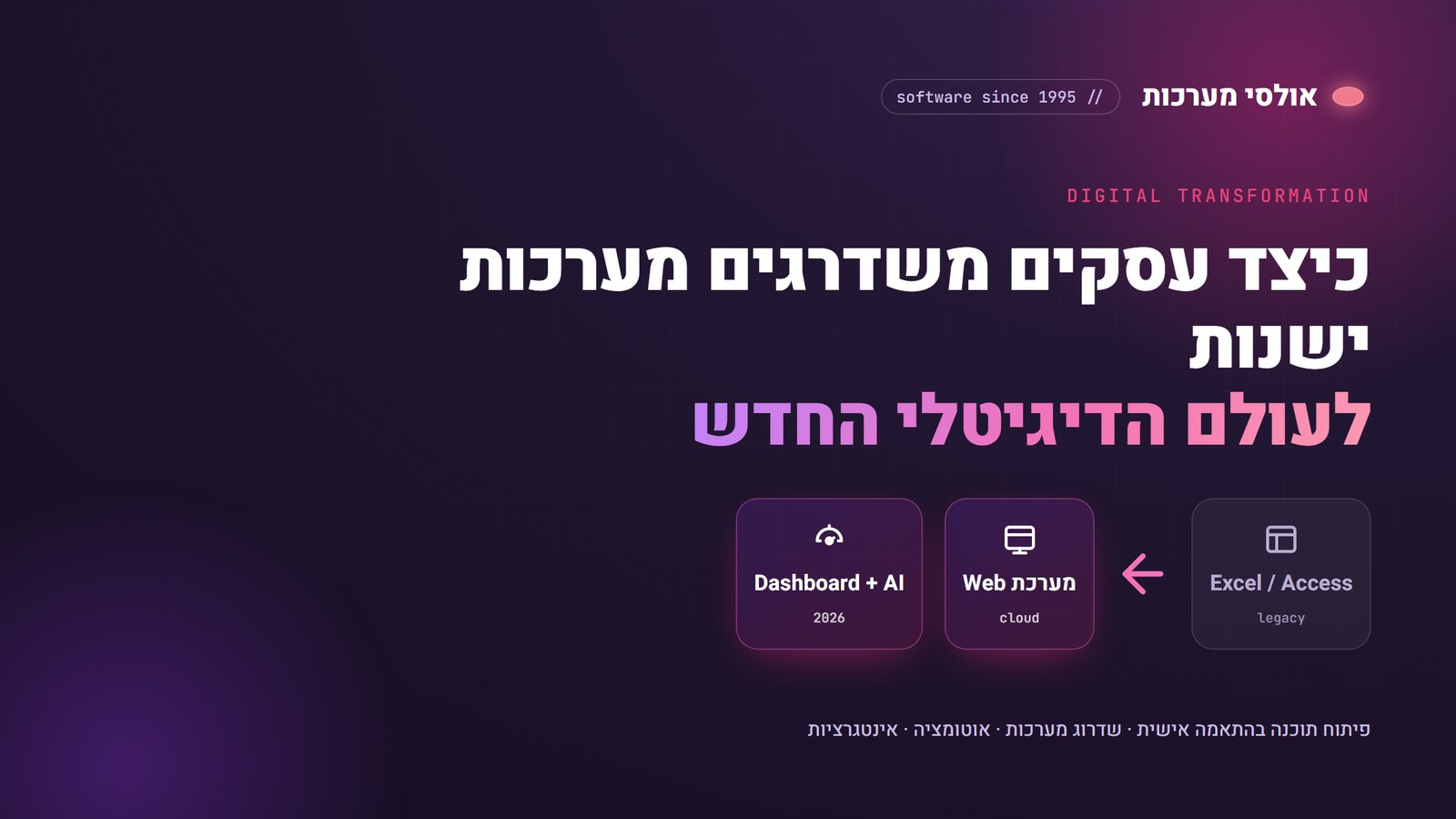
In the business landscape of 2026, software is no longer just a working tool - it is the foundation on which the organization, its people, and its business processes run. Companies need to make decisions fast, manage information in real time, enable work from anywhere, and connect to the many systems running side by side.
Even so, many companies still rely on systems built years ago: databases in Microsoft Access or intricate Excel files that have gradually become the central management system of the business.
These systems served the organization well for years, but as the business grows and requirements change, they struggle to keep up with the demands of a modern work environment.
Today, a high-quality software solution is not just about replacing an old system. It is about creating a smart business platform - one that includes an advanced Web system, dashboards, apps, integrations, business automation, and built-in AI capabilities that help managers and employees make better decisions.
Many businesses still run on systems built a decade or more ago
In many organizations you will find veteran systems that were custom-built for the business many years ago.
Sometimes it is a tailor-made Access database, and sometimes it is dozens of Excel files linked together through formulas, macros, or VBA.
In most cases the system still "works," but it no longer fits the way a modern organization operates.
Employees struggle to work at the same time, information is scattered across multiple files, remote access is limited, integrating with other systems is difficult, and pulling data in real time becomes a complex task.
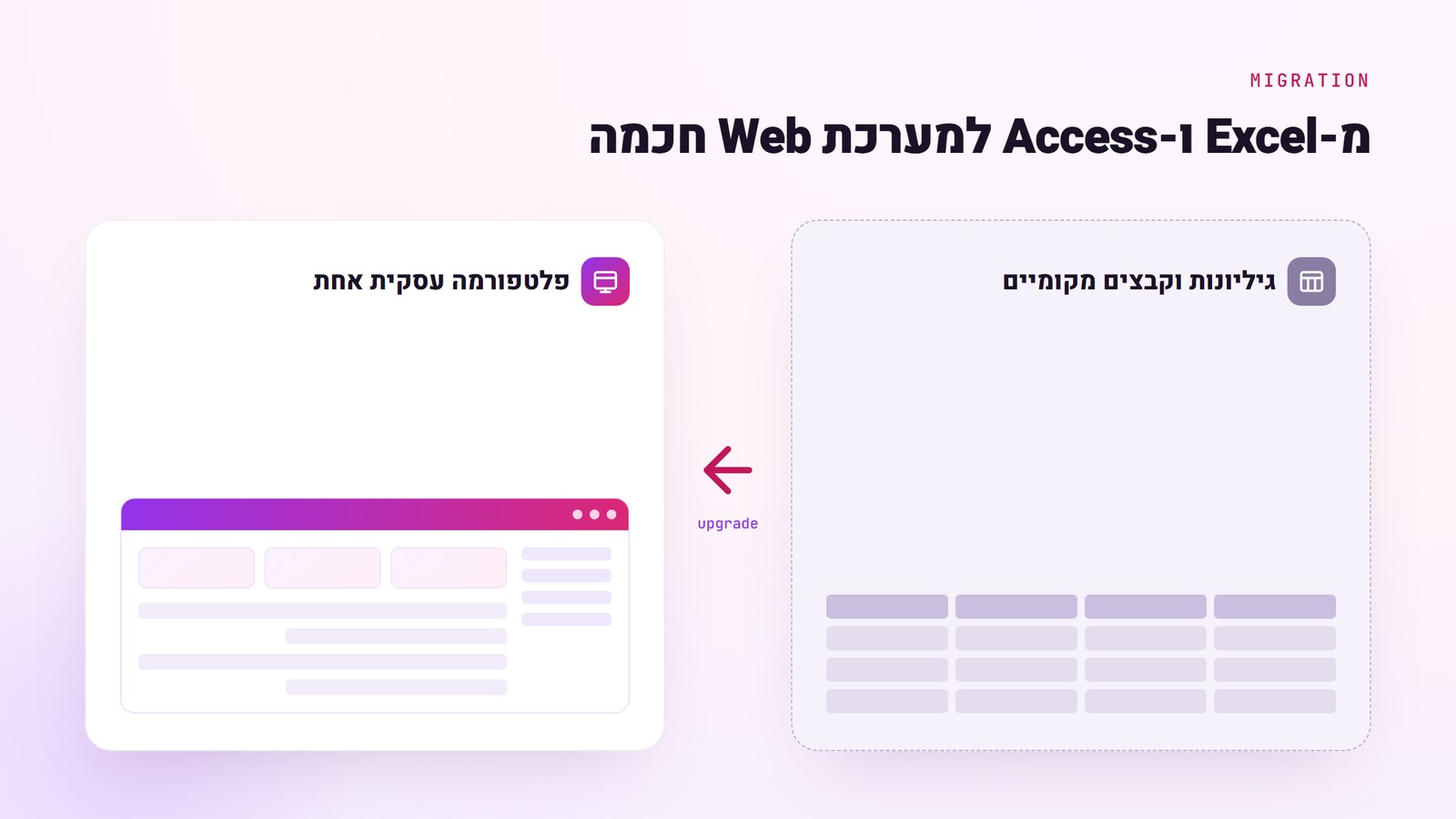
In many cases the answer is not to start everything from scratch, but to carry out an Access upgrade to a smart Web system while preserving the database, the business logic, and the unique processes built up over the years.
By the same token, businesses whose operations run on spreadsheets can move from Excel files to a smart system that supports orderly work, user permissions, full automation, and access from anywhere.
You do not always need to replace the system - sometimes a proper migration is enough
One of the most common mistakes is to assume that a veteran system is worthless.
In practice, in many cases the business knowledge embedded in the system over the years is one of the organization's most valuable assets.
With a professional specification, you can preserve the workflows that work well, move the database to a modern environment, and add new capabilities that never existed before.
This approach shortens development time, reduces risk, and lets employees keep working in the environment they know - only in a version that is far more advanced, secure, and accessible.
Web systems are no longer an advantage, they are the standard
A modern business system needs to be available anywhere, at any time.
Managers want to view data from their mobile phone.
Sales reps need to update information from the field.
Warehouse staff work with handheld terminals.
Production managers need real-time alerts.
A Web system lets every user work on the same database, with no local installations, while maintaining advanced permissions, information security, and centralized backup.
When the system is designed correctly, you can also add dedicated apps, customer portals, supplier portals, and additional work interfaces - all running against the same central data store.
AI does not replace your management system, it upgrades it
In 2026 almost every organization is talking about artificial intelligence, but it is important to understand that the real value of AI does not stand on its own.
AI capabilities become meaningful when they are woven into the business's management system.
For example:
- Detecting anomalies in production processes.
- Predicting inventory shortages.
- Analyzing sales trends.
- Producing smart reports in natural language.
- Summarizing data automatically.
- Generating alerts on anomalies.
- Supporting real-time decision-making.
When AI is given access to the organization's information, it can become a powerful working tool for managers, employees, and customers alike.
Smart dashboards - turning information into decisions
Managers are no longer looking for reports dozens of pages long.
They want to understand what is happening in the business within seconds.
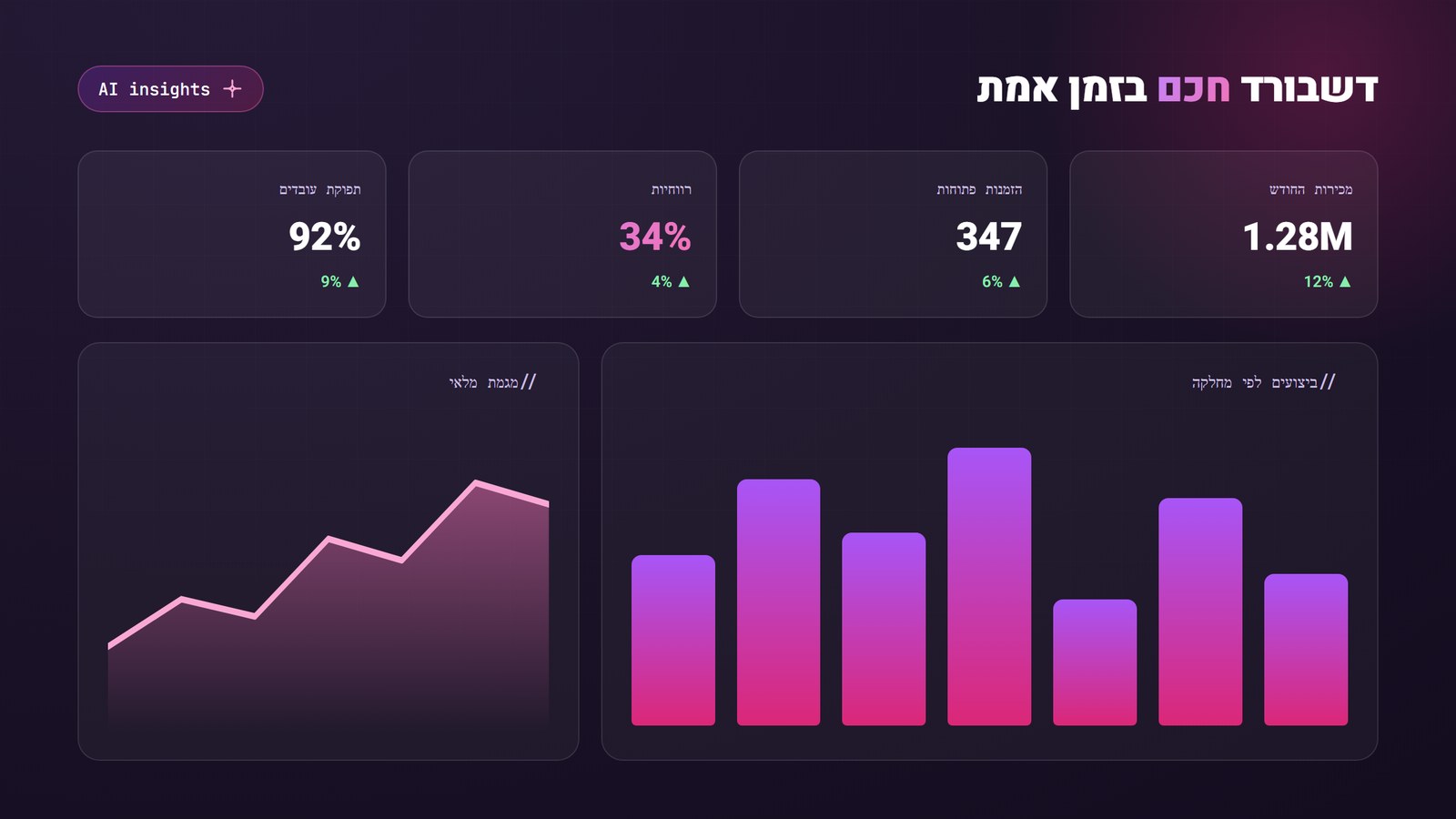
Advanced systems can present interactive dashboards that show, in real time:
- Sales.
- Open orders.
- Inventory.
- Profitability.
- Employee output.
- Department targets.
- Anomaly alerts.
- Company performance.
This makes it possible to spot trends quickly and make decisions based on up-to-date data.
Custom software development lets the system work around your business, not the other way around
Every organization has different workflows - factories, service companies, logistics companies, medical organizations, trading companies, and many other kinds of business.
That is why an off-the-shelf system cannot always meet every need in full.
With custom software development, you can build a system tailored to exactly how the organization operates, combining screens, permissions, business processes, integrations, apps, and reports that fit the company's unique needs.
The system grows together with the business, letting you add new capabilities as the organization develops.
Looking ahead
Organizations that keep relying on legacy systems, Excel files, or Desktop software may find that the challenge is not just technological, but a business one.
Businesses that invest in a proper upgrade of their existing systems - in automation, integration, and AI capabilities - enjoy a more efficient work environment, more reliable information, and a technology foundation ready to grow in the years ahead.
The success of a software project is not measured only by the technology it is built on, but by its ability to streamline processes, connect people and systems, and give the organization better tools for making decisions. That is the difference between a system that manages information and a system that moves the business forward.
Learn more about upgrading Access to a smart system built for 2026 technologies
Get in touch by leaving your details for a callback, give us a call, or reach us on WhatsApp
We would be glad to help!