
Central project management
One list of every project with its number, customer, status, contract price, and assigned employees, plus a dedicated card for each project.
In construction and renovation, profit does not vanish all at once - it erodes quietly: a supplier invoice recorded with no project attached, work hours nobody assigned, one expense that really belonged to two different sites. For Ilanot Gvohim Construction and Renovation we built a single system that ties contract, expenses, and income to every project, and shows profitability at the site level instead of only at year end.
overview
A construction and renovation company runs several active fronts at once: sites in different cities, crews moving between them, suppliers and subcontractors issuing invoices, and financial transactions landing in the bookkeeping system with nothing to tie them to the project they actually belong to.
The result is familiar to every manager: you know how much came in and how much went out overall, but not where exactly the profit eroded. Ilanot Gvohim Construction and Renovation came to us to close precisely that gap - one system that holds the projects, customers, employees, suppliers, and money in the same place, and connects every expense line to its project.
the solution
One workspace that brings together projects, customers, employees, and suppliers, takes in the bookkeeping data, and assigns every line to a project - all the way to the profitability report and the supplier payment file.
One list of every project with its number, customer, status, contract price, and assigned employees, plus a dedicated card for each project.
Separate management screens with search, filtering, and permissions, keeping cost-report employees distinct from system users.
Upload cost reports, receivable balances, ledger cards, revenue documents, and the customer index, with column mapping, row validation, and duplicate detection.
Every expense line gets a supplier, an employee, and a project, and can be split across several projects. The system requires a total allocation of 100% before saving.
The contract price against assigned expenses and income, with expected profit, date-range filtering, and a breakdown by project and by employee.
Pick a period and the records, review the data, then export a consolidated supplier payment file - instead of preparing every transfer by hand.
the system
Real screenshots from the system we built - from the management dashboard to the profitability report, all in full right-to-left Hebrew.
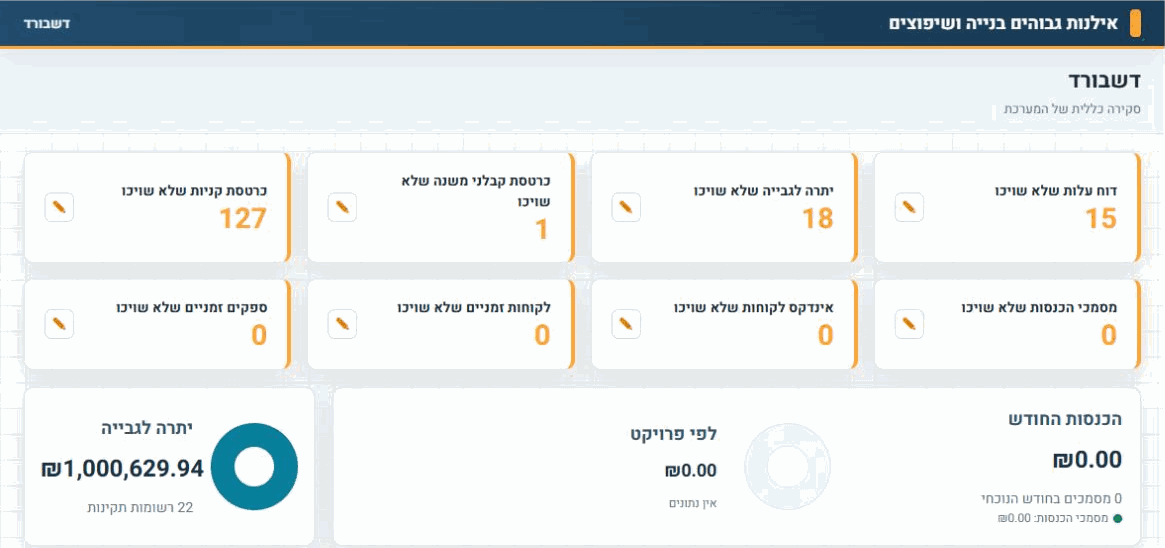
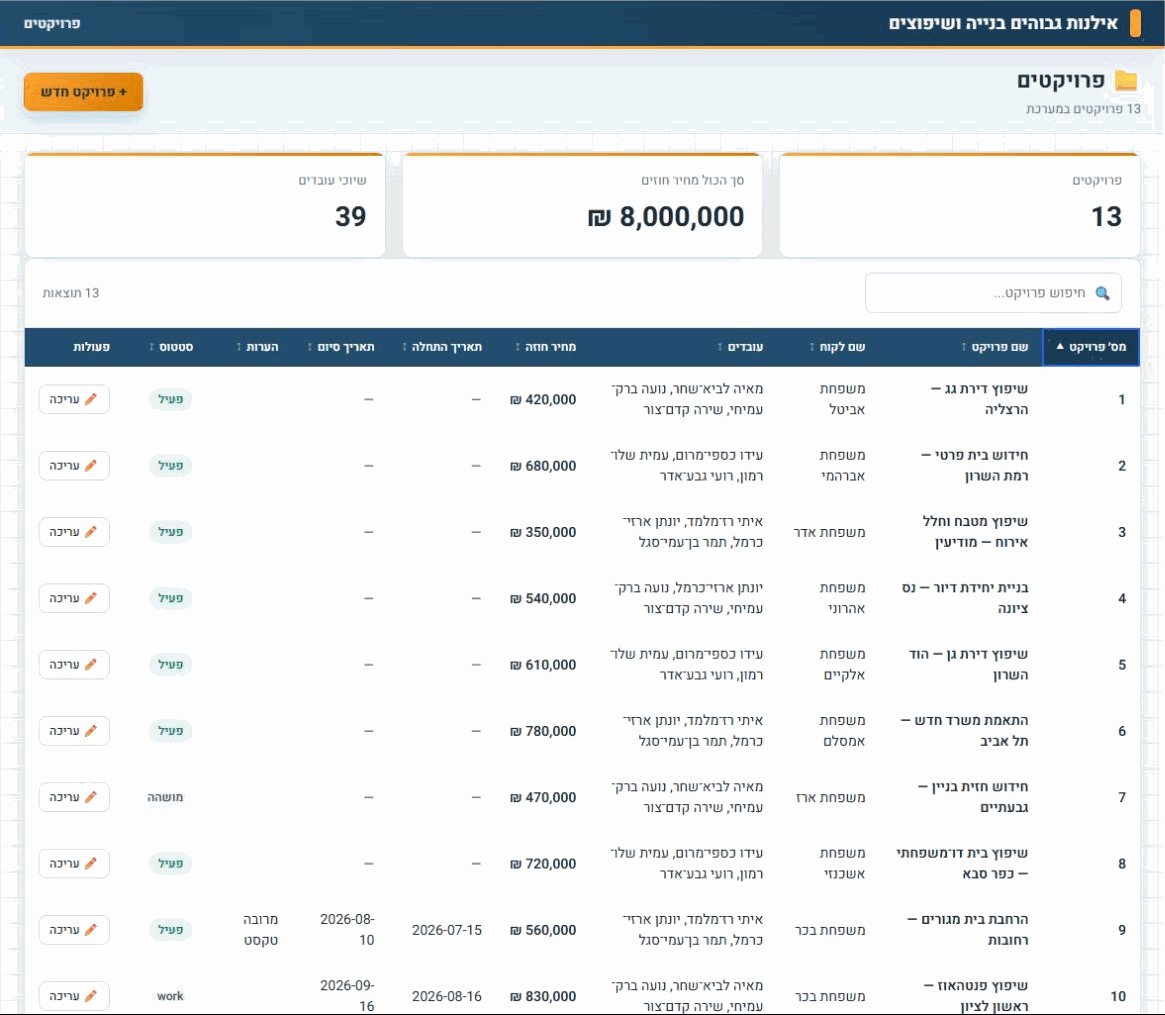
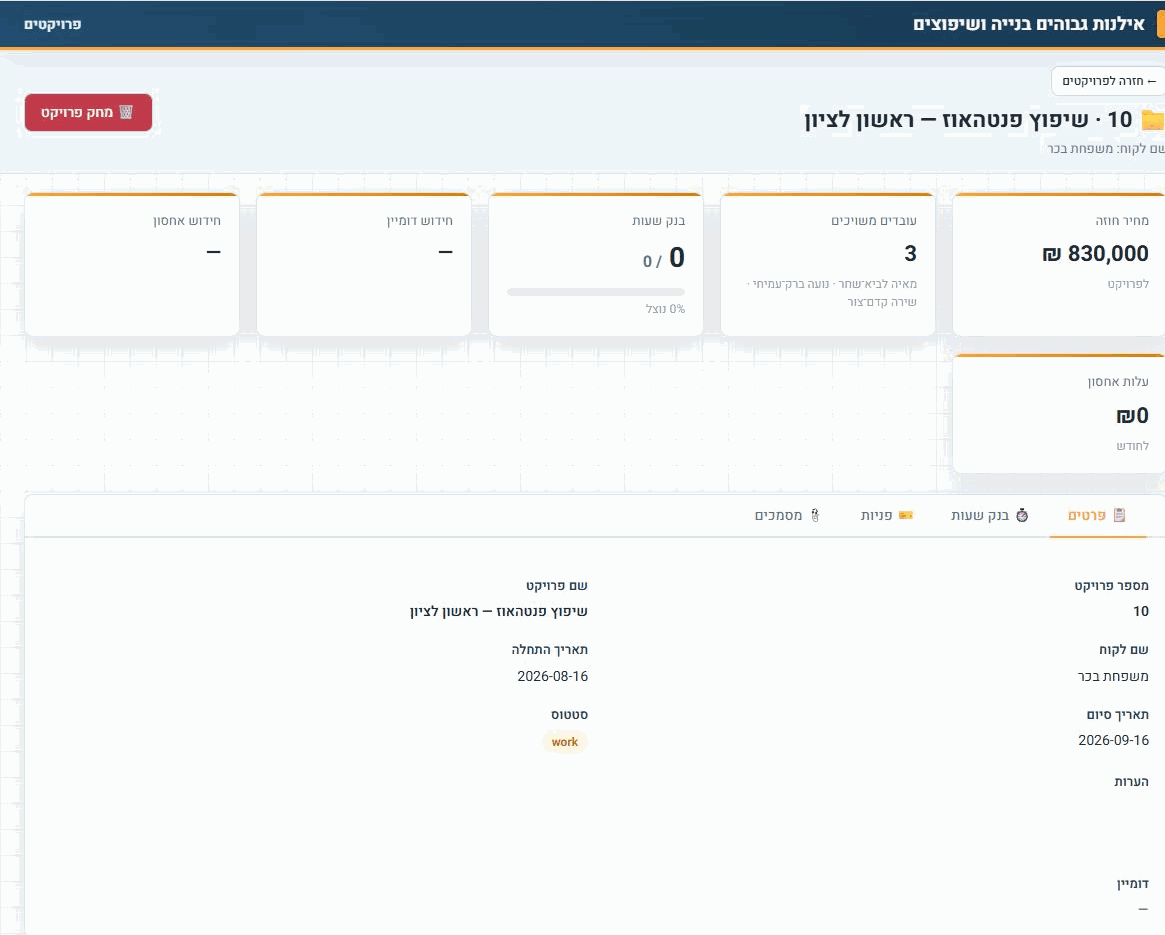
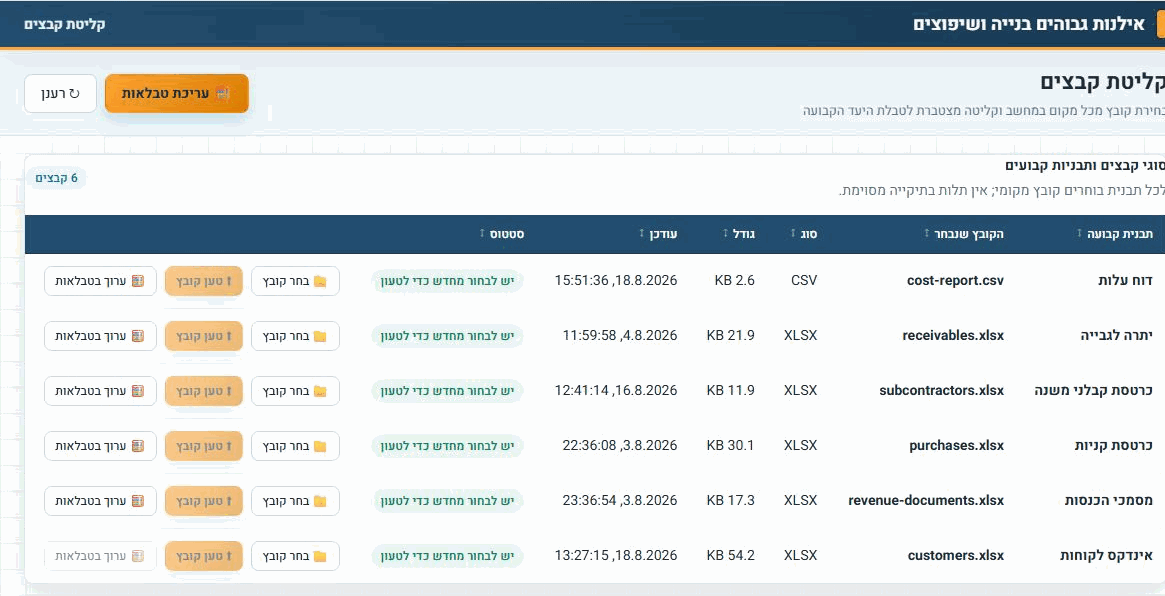
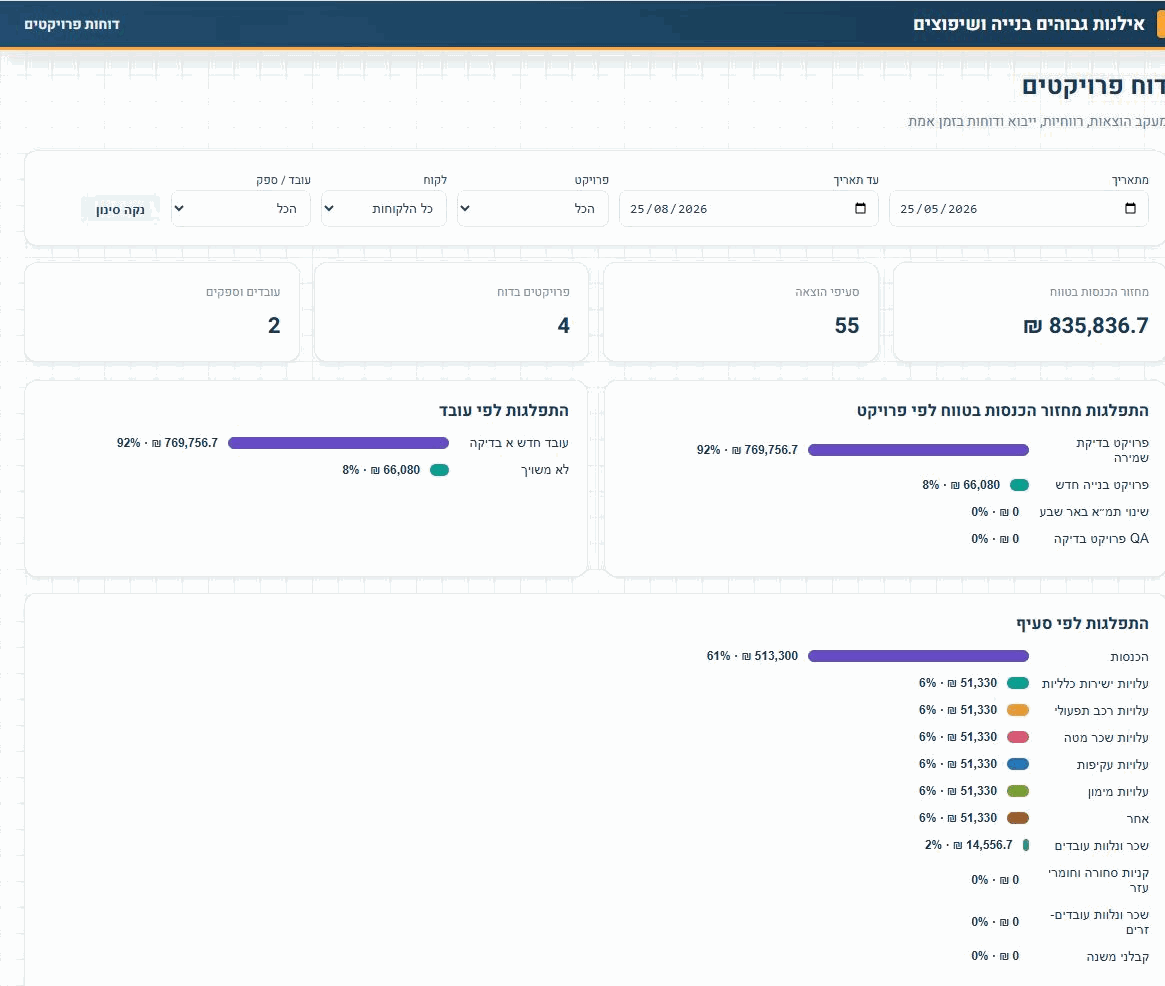
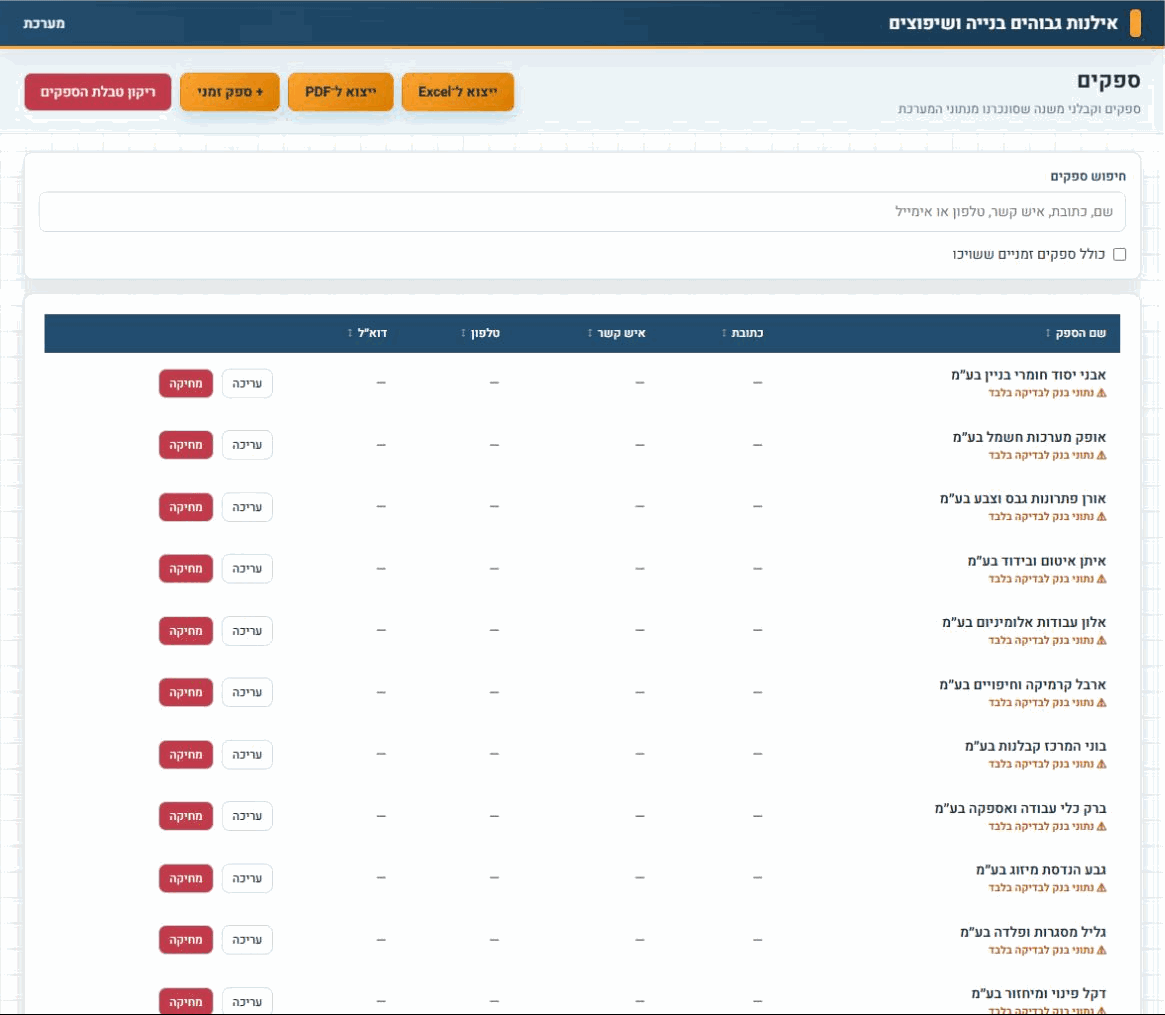
In the screenshots, employee and supplier names were replaced with fictitious ones, and contact details and ID numbers were hidden for privacy.
results
Instead of one general summary at the end of the year, there is now a financial picture for every project separately, and control over the money before it goes out.
Contract price, expenses, and income connect to the same project, so you can see profit and loss for each site on its own and not only in the overall balance.
Every line that comes in gets a supplier, an employee, and a project, and the dashboard shows how many items are still waiting to be assigned - so no expense stays outside the picture.
Preparing Masav payments goes through period filtering, record selection, and a data check on a dedicated screen, and only then is the supplier payment file exported.
our approach
We fit the software to you, not the other way around. First we understand in depth how the company really works, and only then do we write a line of code.
We sit with management and with the bookkeeper and work out where every piece of data comes from, how it looks in the file, and where it needs to end up.
Together we set what gets assigned to what, when an expense is split across several projects, and which fields must be filled before saving.
We build in order of value: projects and core databases first, then file import and assignment, then the reports and payment file generation.
We go live with real data, train the team, and stay available after launch for ongoing improvement and expansion.